


 Oops! We couldn’t find any results...

Blockchain technology is here to stay. We have compiled this glossary to help you understand some of the most common industry jargon that you will come across as you dive deeper into this technology. These are fundamental building blocks to start understanding the business models of blockchain-based businesses.

1. What is blockchain technology?
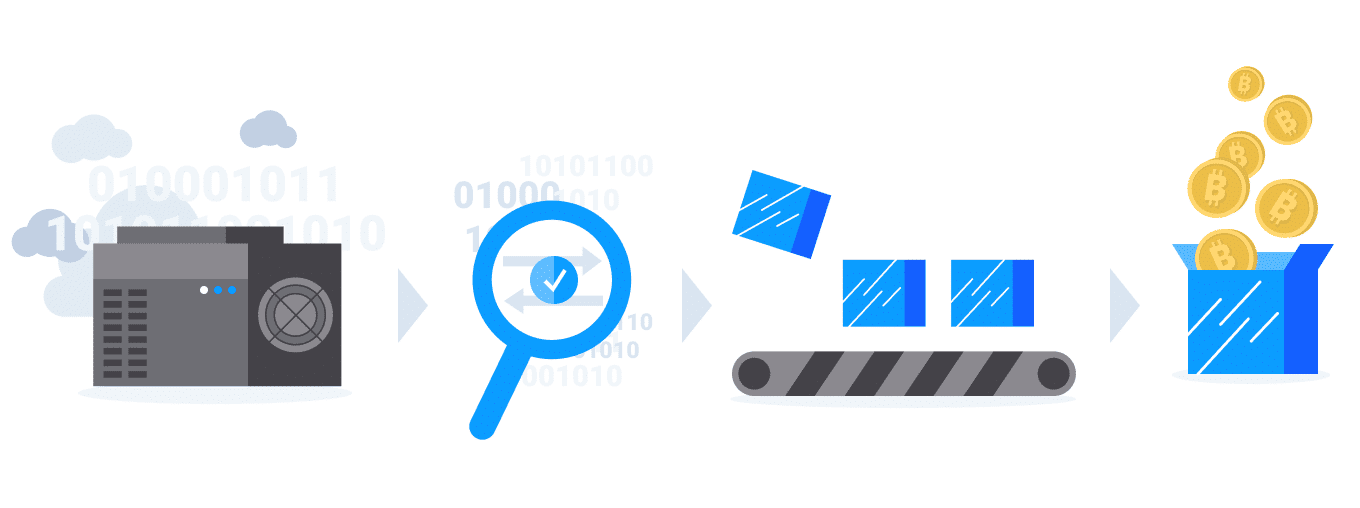
Blockchain technology is a way to organize data and keep records; and make such records immutable (they cannot be altered after being recorded). Blocks store information about transactions like the date, time, the participants, and other relevant details. Because of these qualities, blockchain technology is useful for situations where data integrity is extremely important. Use cases for this can range from financial transactions to maintaining the integrity of a product supply chain. A promising example of this is to combat drug counterfeiting by using blockchain technology to track and verify the supply chain of drugs that are commonly counterfeited. Each step of the drug manufacturing process can be logged, verified, and ultimately viewed using blockchain technology.
How does it work? Data is entered at each step, including date, time, who is participating in the transaction, and other relevant details. The data is organized into blocks, and these blocks are arranged one after another, starting with a genesis block. You can think of this sequence of blocks as data being chained together through hashing and cryptography, which are mathematical techniques to ensure the security of the data that is being stored.
The blockchain is the brainchild of Satoshi Nakamoto and other cryptography experts such as Nick Szabo. There are many different blockchains in the cryptocurrency world, such as Bitcoin, Ethereum, EOS, and Algorand. Each of these have their own pros and cons that make them best suited to different applications.
2. Bitcoin

Bitcoin refers to digital currency that is stored and tracked on the Bitcoin blockchain. Bitcoin, which is abbreviated as BTC, is currently the most popular digital currency (a.k.a. cryptocurrency) with a market cap of 190 Billion+ as of July 27, 2020. It is important to note that bitcoin is NOT synonymous with cryptocurrency or blockchain.
Bitcoin is traded on cryptocurrency exchanges such as Coinbase. It can be used to buy products on hundreds of sites and is often used as an alternative “store of value” (similar to gold). Bitcoin was first created in 2009 and gained wide-spread popularity in 2017, when its price skyrocketed to almost $20,000 per coin. Its power comes from the fact that transactions happen without middle-men like banks, and can be transacted cross-border seamlessly.
3. Smart contract
A smart contract is a ‘self-executing’ contract that is a relatively new development in the blockchain world. It’s terms of agreement, much like a traditional contract, are written in code. The code of functions and logic allows the contract to be executed that is traditionally done by an external third party (i.e. a broker or an escrow agent). Smart contracts allow for digital code and rules to remove the need for a middleman to mediate a transaction. This can lead to decreased costs and increased efficiency in many applications.
4. DLT, Distributed Ledger Technology
Distributed Ledger Technology is a more general term for a database that exists across several locations or among multiple participants. In other words, the database of transactions is distributed and not centralized. Blockchain technology is a type of DLT.
5. Cryptocurrency![]()

Cryptocurrency is a generic term to refer to digital currencies that are created using blockchain and other distributed ledger technologies. Cryptocurrencies (or just crypto for short), have their name because of the cryptography that is used to secure blockchains and other distributed ledgers that these digital currencies are built on. Cryptocurrencies are also commonly referred to as tokens.
6. Fiat currency
Fiat currencies refer to traditional, government-issued forms of currency, such as the US Dollar, Chinese Yuan, or the European Euro. Fiat currencies are issued and controlled by national governments. There is no limit to the amount of fiat money that can be created. Cryptocurrencies are notably different in that most have a fixed supply (Bitcoin will have a maximum of 21 million coins, for example).
7. Stablecoins
Stablecoins refer to a class of cryptocurrencies whose purpose is to maintain a certain value, and they are typically pegged to a fiat currency such as the U.S. dollar. These digital currencies are typically less volatile than other types of cryptocurrencies because of the way they are structured economically. Other types of stablecoins attempt to limit volatility by controlling the amount of coins in circulation.
8. Utility tokens vs Security tokens
A token, in general terms, is a representation of something in its particular ecosystem, such as value, stake, and voting right. Utility tokens, however, are fundamentally different from Security tokens. Essentially, Utility tokens are intended to be used within a closed ecosystem. For example, some utility tokens such as Sia can be used to purchase storage space on a decentralized computer network.
Security tokens, on the other hand, are typically regulated by government entities, and can act like a financial security (share). Owners of security tokens may be entitled to a share of profits from the underlying business, or they may serve a similar purpose as public securities (stocks). The Republic Note is an example of a security token. These shares - whether Utility or Security are created via the process called tokenization. The process of tokenization to give away security or utility tokens in a public sale is called ICO (Initial Coin Offering) for Utility tokens and STO (Security Token Offerings) in case of security tokens.
9. Wallet
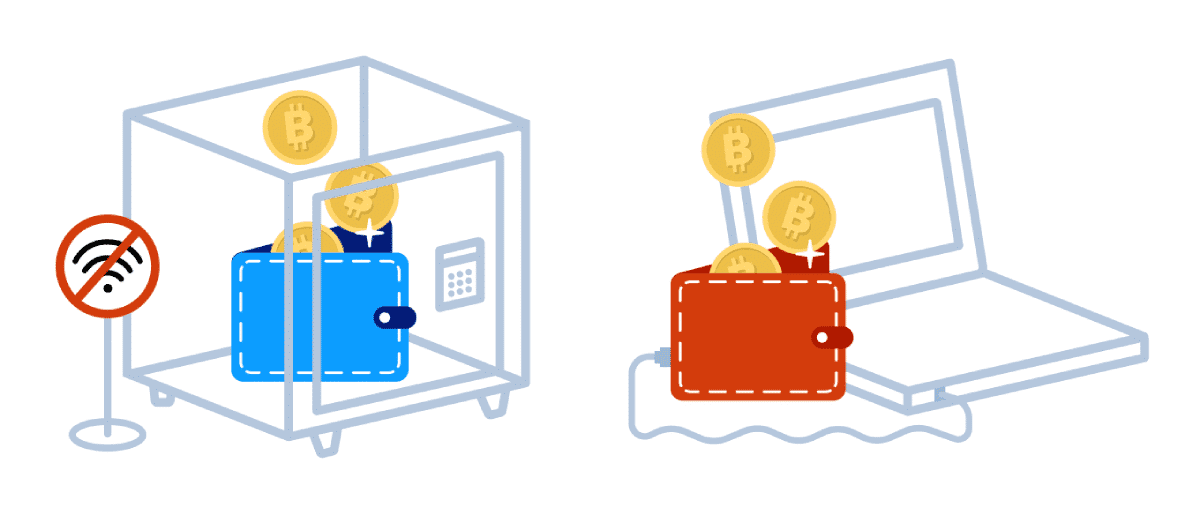
A wallet (in the blockchain world) refers to a digital address that stores cryptocurrencies and tokens. Wallets can be used to send and receive cryptocurrencies. There are many different types of wallets, including:
Hardware wallets
Software wallets
Exchange wallets
How do wallets work? (Public and private key explanation)
A crypto wallet has a public key and a private key. The public key is the outward-facing wallet address (typically a string of letters and numbers) and is used to receive funds. Someone that is looking to send you crypto will send it to your wallet address aka your public key. The private key is known only to the wallet owner and it is what you use to sign and approve transactions (like sending cryptocurrency to someone else). The private key is the counterpart to the public key and is used to prove that the user owns the public key. Keep in mind that there is no physical exchange of coins and the transactions are purely digital and stored on the blockchain.
10. Cryptocurrency exchanges
Exchanges are places where users can purchase, sell, and trade cryptocurrencies. Blockchain projects that have a cryptocurrency can approach exchanges to discuss the process to list their token or cryptocurrency on the exchange so that it can become more liquid. Some of the largest crypto exchanges are Binance, Coinbase, and Bittrex.
Bryan Myint is the Head of West Coast Advisory at Republic Advisory Services (RAS). RAS is the premier venture investment platform that provides end to end advisory and fundraising services for select portfolio companies in the fintech/blockchain space. The RAS Team works with top tier venture and liquidity partners in the blockchain industry to provide the best in class network and experience to our clients.
If you are the founder of a blockchain project that would like to join our exclusive portfolio of advisory clients, please email bryan@republicadvisory.io
This educational article is provided by Republic to help its users understand this area of the market, it should not be construed as investment advice as it is impersonal, disinterested and was produced by Republic for Republic’s users, without remuneration received or expected.








we ask users to verify their identity.