


 Oops! We couldn’t find any results...

“Being an experienced angel investor is like knowing one of the six winning lottery numbers in advance.”
Have you ever played Powerball? How many tickets did you buy? If you’re like most people, you probably bought one ticket and hoped for the best, knowing the outcome would likely result in a loss (the odds of winning are 1 in 292,201,338).
So why do people play? Well, for one, people like to dream. A windfall can bring about seemingly endless, exciting opportunities. It’s also affordable: a two-dollar ticket isn’t likely to break the bank.
So what does angel investing have to do with playing the lottery? Believe it or not, more than you would think. They both have low initial investments, high risk, and the potential to make life-changing money (high reward).
But, more importantly, they deal with odds, which tend to grow more predictable as the number of chances increases.
Investing smarter through the power of probability
“What are the chances?” is a statement usually made in the rhetorical sense, but probability theory can actually get us close to an answer.
Have you heard of the law of large numbers? It’s a theorem that describes the result of performing the same experiment many times, where the higher the number of attempts equates to more predictable outcomes.
This may sound like half of the definition of insanity (and it is), but when applied to investing, it’s an essential way to reduce overall risk. This approach is crucial when investing in private companies, where the inherent risk is too high to chance with too few investments.
Of course, it’s important to note that when you invest a “large number of times,” you aren’t placing all your bets on the same startup. That would be silly.
Instead, you are spreading your capital across multiple startups for a chance at landing a winner—which, as you’ll soon see—can potentially make up for any losers in the bunch.
Why investing in multiple startups matters (according to a pro)
Jason Calacanis is a successful entrepreneur and angel investor that knows what it takes to make it in the private investing game. He’s landed several unicorns, including Uber, Robinhood, and Calm, among others.
While he’s made enough money for several lifetimes, his success didn’t come without a steady diet of losses.
In an interview with The Wrap in 2017, Jason shared his thoughts on the mindset and formula that got him to where he is today:
“You have to be willing to take a certain amount of risk, and deal with a large amount of bad news,” said Calacanis. “The majority of investments go to zero, these are highly speculative companies. They’re essentially experiments. Two, three, four people try to do something, [and the] majority chance is failure.”
Everyday investors can learn a key lesson from this advice. Startup investing deals heavily in chance. It's a place where even the most “promising” startups can fall flat on their face. Savvy angel investors are aware of this and bake these odds into their strategies.
Aim for 50 (or more)
The number of deals you choose to invest in is entirely up to you. Your decision will depend on many personal factors, such as the time you are willing to invest in screening deals and the amount of capital you are willing to risk.
Aside from personal matters, it’s also important to harvest wisdom from reliable sources to see what you can apply to your own journey.
As you’ll see from the following three examples (one academic; two angels), an average of fifty investments consistently appears to be the most favored number of startups that angel investors should own in their portfolios.
A 2017 UK study by the University of Edinburgh simulated 90,000 portfolios, representing 20.5 million investments in portfolios ranging from 5 to 450 investments.
They concluded:
“50 is the magic number – only at this portfolio size does the risk of IRR (internal rate of return) <10% fall below 1 in 5.”

Dave McClure
In an article from his blog, notable angel investor and founder of business accelerator 500 Startups weighed in on where he thinks the sweet spot lies in startup investing:
“Most VC funds are far too concentrated in a small number (<20–40) of companies. The industry would be better served by doubling or tripling the average [number] of investments in a portfolio, particularly for early-stage investors where startup attrition is even greater. If unicorns happen only 1–2% of the time, it logically follows that portfolio size should include a minimum of 50-100+ companies in order to have a reasonable shot at capturing these elusive and mythical creatures.”
Read more about the elusive Unicorn here
Jason Calacanis
In his book, “Angel: How to Invest in Technology Startups — Timeless Advice from an Angel Investor Who Turned $100,000 into $100,000,000,” Calacanis states that the best way to get a unicorn is to aim to invest in at least 50 startups over a timeline of 3-5 years.
*Note: Dave’s and Jason’s advice is geared towards landing a unicorn—the ultimate goal of an angel investor. While this is a good goal to have, it is a lofty one and shouldn’t be misconstrued as the norm.
The road to 50
If you’re wondering how to build your portfolio to at least 50 startups, consider these tips to start:
Discover how much you are allowed to invest
Decide how much you are willing to invest
Create a timeline for capital deployment (e.g., 1,3,5 years)
Evaluate and select companies you understand and believe in
Example portfolio construction:
- Investable assets: $5,000
- Number of startups: 50
- Timeline: 3 years
The table below assumes a systematic investment of $140 in one startup per month for 36 months (3 years), with an ultimate goal of deploying capital into 50 investments by the end of year three.
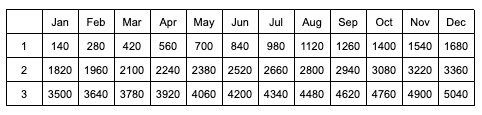
The example above shows just one of many systematic investment strategies you can employ on Republic. Since the majority of our Reg CF deals start with a minimum investment of only $100, it’s easy for you to spread your dollars across several deals (in various sectors), giving yourself the diversity that is critical for building a well-balanced portfolio.
Additionally, by investing slowly, you will constantly be learning, which will allow you to analyze your strategy and make necessary tweaks along the way.